
The $2,400/Month Mistake Most Scheduling Teams Make
Multi-channel teams routinely overpay for schedulers by 3-5x. I've audited marketing stacks where teams shelled out for an enterprise-tier scheduler while posting to just three channels and never touching half the automation features they're paying for. This isn't a buying guide that lists every option. It's a decision tree: answer the branching questions honestly, and you'll land on the right tool for your exact size, channel count, and workflow — without subsidizing features you'll never open.
Decision Node 1: How Many Accounts, How Many Humans?
Everything branches from this. A single-person creator publishing to Instagram and LinkedIn has no business on an enterprise platform. A five-person social team posting to 40 accounts has equally little business on a cheap personal scheduler that throttles mass scheduling.
- 1-5 accounts, 1 user: Free or cheap single-plan tools win. Anything enterprise is wasted budget.
- 5-20 accounts, 2-5 users: Mid-tier plans with collaboration, approval flows, and per-account analytics are worth it.
- 20+ accounts, distributed team: You need asset libraries, granular permissioning, and API-heavy automation. Now enterprise pricing makes sense.
If you're unsure about what else should sit in your broader toolkit, this decision is a classic case of the AI tools shopping problem — choose for your workflow, not for the marketing page.
Decision Node 2: Do You Need Cross-Channel Native Scheduling?
The biggest hidden split in this category is between tools that post via official platform APIs and tools that use "native" or "first-party" publishing where available. If you run heavy Instagram Carousel or TikTok workflows, some schedulers physically cannot post specific media types to specific channels without workarounds. This is the single most common reason teams "buy a scheduler and still post manually."
Before you compare prices, verify that your top two channels support the exact post types you actually create (Reels, Carousels, Stories, threads, videos). If they don't, no discount makes that tool a fit. For a fuller picture of which channels play well together, see our AI social media tools guide.
Decision Node 3: Where Does the Content Come From?
Are you scheduling from a spreadsheet, a CANVA-style graphic pipeline, or a full content calendar with a CRM's campaign data? Your scheduling tool either plugs into your content source or it doesn't.
- Spreadsheet-driven: Bulk CSV upload is non-negotiable. Test it before paying.
- Graphic-pipeline-driven: The scheduler needs tight integrations with your design tool, or you'll copy-paste assets forever.
- Campaign-data-driven: You need the scheduler to read tags and segments from your marketing platform so posts inherit the right audience targeting.
If your content pipeline is graphic-heavy, cross-referencing how design and scheduling tools fit together — like the ones profiled in social media graphics — will save you hours every week.
Decision Node 4: What Are You Willing to Pay Per Account?
This is where most people get burned. Pricing models differ wildly: per-seat, per-account, per-social-set, or per-posts-per-month. Two tools can quote the same $50/month and deliver completely different headroom. The rule that saves money: divide the monthly price by the number of active accounts you'll publish from. Anything above roughly $4-5 per account per month had better come with serious built-in analytics and automation, not just a nicer queue.
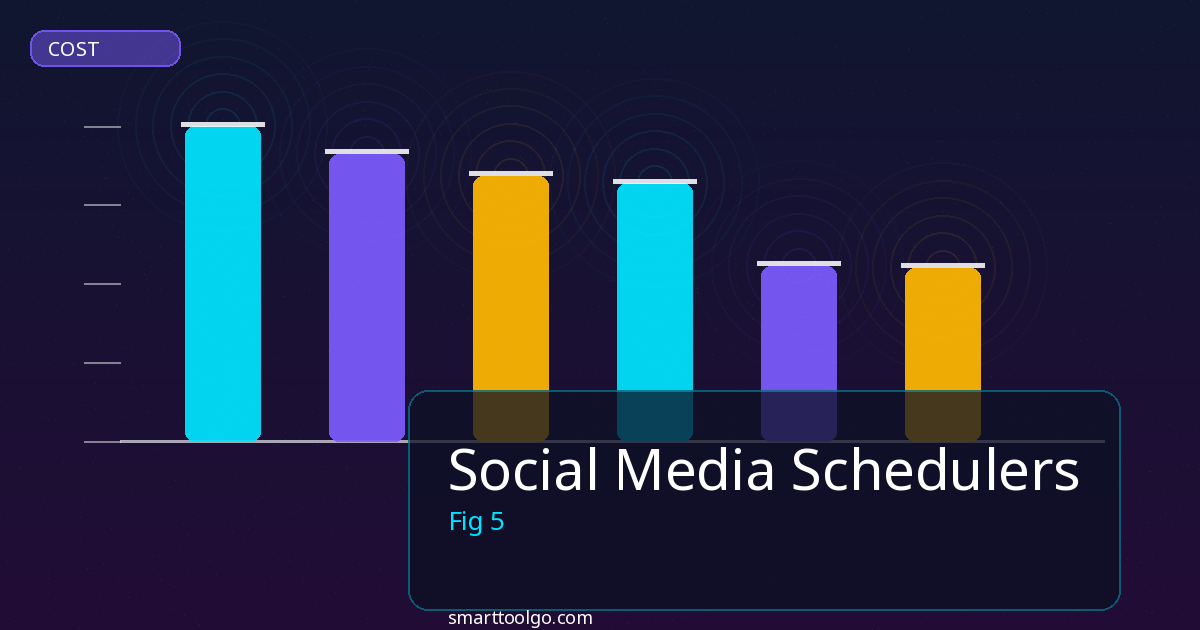
To put the numbers in perspective, here's how the majors actually price out today.
| Platform / Tool | Key Features | Pricing |
|---|---|---|
| Buffer | Simple queue on all major networks, optional AI assistant, per-channel analytics, free 3-channel starter. | Free for 3 channels/10 posts per channel; paid from $6/month per channel. |
| Later | Instagram-first visual planner, drag-and-drop calendar, Linkin.bio sales page, analytics and AI caption generator. | Free for 1 profile/30 posts per month; paid from $25/month for 1 social set. |
| Hootsuite | Mass scheduling, 150+ app integrations, Ormelo AI, approval workflows, team collaboration on higher tiers. | Professional from $99/month for 10 accounts. |
| Sprout Social | Unified social inbox, publishing + analytics together, post-performance reports, listener on high tiers. | Standard from $249/month for 5 profiles. |
| SocialBee | Content categories with evergreen recycling, AI copy, RSS-to-post automation, bulk scheduling. | Starter from $29/month for 5 social accounts. |
The disciplined move: pick the two tools whose per-account math fits your real account count, then test those against your content type. Don't compare list prices; compare cost per active account.
Decision Node 5: Do You Need Best Time Scheduling or Automation?
"Best time" auto-scheduling is one of the most-hyped features that most teams underuse. If your audience is global and you post sporadically, a best-time engine genuinely helps. If you run a B2B brand posting twice daily in a fixed time zone, best-time features add near-zero value — you already know your window. Similarly, AI-content-generation tiers vary: some tools just paraphrase your caption, others draft full post copy from a topic and match your tone. Figure out whether AI is a nice-to-have or a core requirement before you pay for it.
Decision Node 6: What Does Your Reporting Must Show?
Most schedulers give you vanity metrics — likes, shares, reach. Fewer give you conversions, link clicks, or ROI attributable to social. If your reporting needs map to business outcomes rather than engagement, you'll want a scheduler that pipes clean data into your analytics stack. When that's the priority, treat the scheduler as part of a broader analytics workflow and read up on social media analytics before you shortlist.
The Correct Order to Decide
Don't start with price. Start with the channel/post-type check (Node 2), because that immediately eliminates half the market. Then size yourself (Node 1) for account and user count. Then match your content source (Node 3). Only after those three should price per account (Node 4) matter. Skipping to price first is how teams end up with a cheap tool that silently can't post Reels or bulk-upload their calendar.
Wrapping the Decision Tree Into an Action Plan
Worked example: a 4-person team managing 18 accounts across Instagram, LinkedIn, X, and Facebook, publishing from a CANVA pipeline, needing approval flows and light engagement reporting. Node 2 says native Reel posting required; Node 3 says graphic-tool integration; Node 1 says 4 users. That points to Sprout or Buffer on a mid-tier plan with collaboration, not a $6-$29 personal plan that caps you at a handful of accounts and one user. The decision tree resolves the ambiguity the marketing pages deliberately leave in.
If you're still torn between a calendar-first tool and an analytics-first tool, check how teams structure their monthly planning in our social media calendars write-up, then align your scheduler choice with that workflow rather than the other way around.
For more, check out: .
FAQ
Why can't my budget scheduler post Instagram Reels directly?
Instagram restricts native third-party Reels publishing through the official API, so tools without access fall back to manual reminders that open the app. If Reels are core to your strategy, confirm the scheduler's Instagram publishing works for your post type during a free trial — this is a hard blocker, not a fixable niggle.
What does "best time to post" really measure, and should I trust it?
It measures when your historical followers were most engaged, segmented by platform and sometimes audience location. Trust it for new or sporadic accounts that lack a clear engagement window, but override it for established B2B brands that already know their buyer's active hours from analytics.
How many accounts can I realistically manage on a free scheduling plan?
Typically 1-5 accounts depending on the tool, with caps on scheduled posts per month (Buffer, for example, allows 10 posts per channel on free). For a solo creator that's often enough to start, but the moment you hit posting caps or need a second user, the paid tier at $25-$30/month is usually the efficient step up.
Is it worth paying for AI caption generation inside a scheduler?
Only if your team struggles with volume or tone consistency. AI captions save real time on high-volume Instagram/LinkedIn schedules, but they still need a human pass for brand voice and compliance. If you post fewer than a few times per week, skip the AI add-on and use a free assistant.
Should I use one tool for scheduling and another for analytics?
Sometimes. Purpose-built analytics tools often out-report multi-purpose schedulers on business outcomes. But maintaining two tools adds cost and data drift. Start with a single tool whose built-in reporting covers your top 3 channels; only add a specialist analytics tool when the scheduler's reports demonstrably fall short. If you plan a bilingual presence, also compare how the same tools handle a Chinese content workflow via our guide to AI Tool推荐.