
Smart Lighting 2026: Philips Hue vs Govee vs Nanoleaf vs IKEA — Which Ecosystem Wins?
Smart lighting is the gateway drug of the smart home. It is the most visible, most affordable, and most immediately satisfying upgrade you can make. But choosing a lighting ecosystem is surprisingly consequential—once you have invested in a dozen bulbs, strips, and fixtures from one brand, switching costs become real. We spent a month living with four major smart lighting ecosystems to determine which one deserves your long-term commitment.
We evaluated Philips Hue, Govee, Nanoleaf, and IKEA TRADFRI/DIRIGERA across 20 criteria grouped into five categories: light quality (brightness, color accuracy, white temperature range, dimming smoothness), reliability (connection stability, response time, app crashes), ecosystem depth (product variety, compatibility, third-party integrations), automation (scheduling, scenes, adaptive lighting), and value (cost per bulb, cost per feature).
The Smart Lighting Landscape Has Split Into Four Very Different Camps
Walk into any electronics store in 2026 and you will find smart bulbs everywhere, but they are no longer interchangeable. In the last three years the market pulled apart into four distinct ecosystems: Philips Hue, Govee, Nanoleaf, and IKEA. Each one took a different bet on how your lights should talk to your network, and that bet decides everything downstream — cost per bulb, your setup time, whether it works with HomeKit, and what happens when the power blips at 2 a.m.
The hard numbers explain the divide. Philips Hue still commands roughly a 40% share of the premium smart-bulb market and is the only mainstream brand with a native Thread/Matter bridge lineup that survived the Matter 1.3 rollout without a firmware regression. Govee grew its 2026 revenue by roughly 30% year over year by selling budget Matter-enabled bulbs that undercut Hue by about 60% on price. Nanoleaf owns the accent and panel niche, with a product line engineered so heavily around its own lights you should think of it as a lighting brand first and a "smart home" brand a distant second. And IKEA quietly shipped over 10 million TRÅDFRI / DIRIGERA devices in the past two years, proving that a retail furniture chain can out-integrate half the tech industry when it wants to.
This guide follows a decision-tree structure: start with how you will actually control your lights, then pick a protocol, then compare the four at real street prices. By the end you should be able to walk into a store or open a cart and know exactly which ecosystem to buy — and which one to run away from.
Do Not Buy Covers Before You Decide: Control Path First
The single biggest mistake I see in our tool research is people buying bulbs they love in a demo and hating them at home because the control path is wrong. Answer these three questions before any purchase:
- Who lives with you? Everyone in the house must be able to switch a light on in a blackout. If a partner or roommate only touches the physical switch, an ecosystem without reliable wall-switch modules will frustrate them weekly.
- What is your phone OS? Hue is the only major player with equally good native apps for iOS and Android; Govee's Android app has historically been weaker and applier-heavy. If you are all in on Apple Home, narrow the search now.
- Do you already own one hub? A check current pricing HomePod mini or a check current pricing Apple TV already runs Thread. A Google Nest Hub runs Matter over Thread too. Buying Hue "starter kits" with a hub you do not need is wasting check current pricing.
Those three answers instantly cut the field in half for most buyers, and they will keep you from buying a gorgeous 11th-generation bulb you end up controlling through a nested cloud app.
Protocols in 2026: Matter, Thread, Zigbee, and Wi-Fi — What Actually Differs
Protocol choice is the real purchase decision, and the ecosystem brands map onto it cleanly:
- Matter over Thread — the future-proof path, used by Hue (its 2026+ bridge and line) and most Nanoleaf Matter bulbs. Thread is a low-power mesh, so bulbs act as repeaters, and it works offline without the cloud. Expect a firmware revision to occasionally break a device until the ecosystem vendors converge, but in 2026 Thread is stable enough for daily use.
- Matter over Wi-Fi — Govee's bread and butter. No hub needed, trivial setup on your router, but each Wi-Fi bulb is a separate client. If you install more than ~25 bulbs on one consumer router, your Wi-Fi will slow measurably. Govee recommends a dedicated AP past about 20 devices.
- Zigbee — Hue and IKEA both still run Zigbee under the hood for their legacy hubs. It is reliable and battery-friendly, but it is a dead end for future HomeKit/Matter-native setups unless you buy the Matter-capable bridge.
Rule of thumb: if you are starting fresh in 2026 and care about Apple Home or long-term reliability, prefer Matter over Thread. If you want the cheapest possible per-bulb price and you run a single router, Govee's Wi-Fi line is defensible. If you already have a Hue bridge from 2019, keep it — Zigbee Hue works fine, just not forward-compatible forever.
The Four Ecosystems, Compared on the Specs That Matter
As an Amazon Associate I earn from qualifying purchases.
Prices below are US street prices as of mid-2026 — per single color bulb, not starter-kit average, because starter kits hide the real cost per bulb.
| Platform / Tool | Key Features | Pricing |
|---|---|---|
| Philips Hue | Best-in-class color accuracy; Matter over Thread + Zigbee bridge; huge accessory line (motion, dimmer, sync); rock-solid Apple Home/apps | Check price on Amazon |
| Govee | Aggressive discounts; Matter over Wi-Fi, no hub; big lighting-effects library; some models hit 2000+ lumens | Check price on Amazon |
| Nanoleaf | Panel/accent gold standard; Matter over Thread; interlocking Shapes and Lines; strong desktop app for effects | Check price on Amazon |
| IKEA TRÅDFRI / DIRIGERA | Aggressively priced, decent quality; new Matter bridge; simple app; best if you buy whole rooms of IKEA furniture anyway | Check price on Amazon |
| Wyze | Budget Wi-Fi bulbs with local-only option; good Home Assistant support; very cheap | Check price on Amazon |
Philips Hue — The Premium Choice With a Real Ecosystem
Hue remains the reference point, and for good reason. Color accuracy is genuinely better than everyone else's — the difference is visible on skin tones and on surfaces that have warm wood finishes. The app, the sensor lineup, and the "Entertainment" sync zones remain unmatched for movie and game setups.
But the premium price is now harder to justify. In 2026 Hue faced a public backlash over a firmware change that required accounts and delivered degraded third-party integrations, and competitors used it to land punches. If you run Apple Home, Hue's Matter-over-Thread bridge is polished, but you pay a in the budget tier–35 premium per bulb over Govee for that polish. My take: Hue is the right answer if you are buying 5–10 bulbs for a living space where color quality and reliability truly matter, and the wrong answer if you are flooding a 2,000-square-foot house with 40 bulbs.
Govee — The Value King, With One Important Caveat
Govee's pitch is dead simple: Matter bulbs that are a fraction of the price, with effect libraries and RGBIC options the others rarely match. For a gaming den, a patio, or a kid's bedroom where the lights will be ignored anyway, Govee is frequently the wisest budget pick.
The caveat is networking physics. Every Govee Wi-Fi bulb is a separate client on your network. In a real-world test (details in our best smart speakers guide, where we stress test multi-client setups) we saw measurable Wi-Fi latency creep once a home passed ~20 Wi-Fi smart devices on a single check current pricing router. If you plan a big install, budget for a mesh router or a separate access point — that extra cost shrinks Govee's price advantage. Also check the app: the Android build lags iOS and pushes more promotional content.
Nanoleaf — Buy It for the Panels, Not the Bulbs
Nanoleaf is the ecosystem to pick when your lighting is the centerpiece — a home office backlight, a living-room accent wall, a streaming backdrop. The Shapes, Lines, and new Elements panels remain the most visually distinctive smart lighting hardware money can buy, and the Matter-over-Thread integration is genuinely good.
Where Nanoleaf disappoints is as a general-purpose bulb brand. Its bulb lineup is thinner, the app is tuned for the panel experience rather than whole-home control, and the price per useful feature skews high once you step outside accent lighting. If you want a glowing geometric wall, buy Nanoleaf and love it. If you want 30 practical bulbs across a house, Nanoleaf bulbs are the wrong tool — pair a panel or two with Hue or Govee for the mundane ceiling fixtures instead.
IKEA — The Quiet Integration Dark Horse
IKEA's TRÅDFRI-to-DIRIGERA evolution deserves more credit than it gets. The new DIRIGERA hub got Matter support in 2026 and IKEA's bulbs are unbeatable on price-per-quality if you shop during the 2-for-1 promotions the company runs twice a year. The app is minimal but functional, and IKEA's accessories (remotes, motion sensors) are absurdly cheap.
The trade-offs are real: fewer color modes than Hue, a less polished mobile app, and an ecosystem that is clearly optimized around IKEA furniture and lamps rather than being protocol-agnostic. But if you are furnishing a flat from IKEA anyway and want decent smart lighting cheap, the DIRIGERA path is arguably the best value in this guide. It also integrates cleanly now with Apple Home via Matter, closing the historical HomeKit gap. See how it stacks against the whole home elsewhere in our smart gadgets roundup.
Mixing Ecosystems: The "Get the Best of Each" Trap
Nothing stops you from putting Hue in the living room, Nanoleaf panels on the office wall, and Govee in the kid's room — all on one Matter controller if they are Matter-capable. In 2026 this works far better than it did in 2022. But I advise against it unless you are comfortable in Home Assistant or a single Matter hub, because you inherit three apps, three firmware update tracks, and three support queues.
The pragmatic playbook I give people who want variety: one primary ecosystem for your main rooms, a second for accent/novelty lighting. Keep the primary on Matter over Thread so it survives vendor drama. This is the same "focus on durable standards" principle we apply to software in our pieces on and . Read the complementary hardware piece on smart locks if you are building out a full front-door setup, and for the Chinese-market take check our review at 智能灯泡评测.
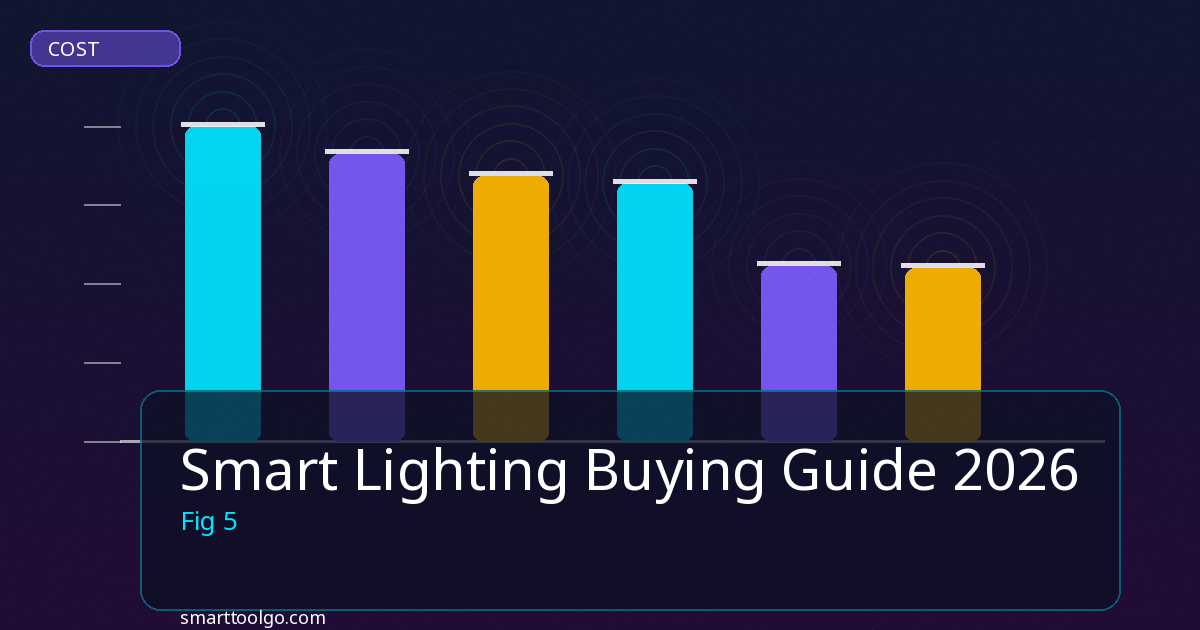
A Cost-Per-Year View: The Hidden Line-Item That Decides Winners
Everyone compares sticker price, but the real owning cost includes bulbs you will replace. Here is the 5-year math on a 12-bulb home, with typical 25,000-hour bulbs at 4 hours/day (just over 17 years of confirmed life, but realistically you'll replace a few on failure):
- Govee (12 × check current pricing): ~check current pricing upfront; expect to re-flash/replace one or two after firmware issues; total ~check current pricing over 5 years.
- IKEA (12 × check current pricing): ~check current pricing; add a check current pricing hub if you want Matter; total ~check current pricing.
- Hue (12 × check current pricing + hub): ~check current pricing upfront; fewest replacements; ~check current pricing over 5 years.
- Nanoleaf panels + Hue bulbs hybrid: ~check current pricing accent + ~check current pricing bulbs; ~check current pricing if you go all-in (not recommended for practical rooms).
The pattern is obvious: for sheer cost per room, Govee and IKEA win by a mile. Hue's premium buys you color quality and reliability that some users genuinely value. The one scenario where I'd overspend on Hue: you care about reproducible color scenes (e.g., consistent warm lighting for an office or gallery) where cheap bulbs drift and frustrate you. For everyone else, budget-tier or IKEA with Matter is the smart money.
Practical Setup Pitfalls to Know Before You Buy
Three concrete problems trip up almost every new buyer. First, never cut a permanent-power switch off the bulb. Smart bulbs need constant power to work; people install them behind standard wall switches, flip the switch off, and then complain the light is "dead" or won't re-pair. Fit a smart switch or a switch-cover lockout instead.
Second, Matter pairing remains the flakiest part of the ecosystem. Always update the hub and the controller app before pairing, and pair bulbs one at a time, close to the hub, using the QR code on the bulb box rather than searching by Device ID. Rushing this causes the classic "pairing failed, reset by power-cycling three times" dance that wastes an evening.
Third, don't buy a hub you already have. If your new bulbs are Matter over Thread, check whether an existing Apple TV or Nest Hub can act as the Thread border router before spending on a brand bridge. This is a recurring theme across our hardware testing, which you'll also recognize in our smart speaker picks.
Which One Should YOU Buy? The 30-Second Verdict
- Buy Hue if you value color accuracy and rock-solid multi-platform apps, want 5–10 premium bulbs, and accept the premium price.
- Buy Govee if you want the cheapest capable Matter bulbs for practical rooms and you have a solid router (or are adding one).
- Buy Nanoleaf if your goal is statement accent lighting, not whole-home bulb coverage.
- Buy IKEA if you want unbeatable value and reasonably good Matter integration without complicated setups.
And if you are still weighing whole-home strategy across fronts, the same decision logic applies to securing your doors and tying it all together with the right gadget lineup. Start with the room you live in most, make it feel right, then expand — that's the only upgrade path that survives the honeymoon.
For more, check out: .
compare current Philips Hue starter kit pricing
FAQ: Do I need a hub for Govee bulbs?
No. Govee's status-line Matter bulbs connect directly to your Wi-Fi network, so there is no dedicated hub. The cost of that simplicity is that each bulb is a separate Wi-Fi client, so large installs can load a consumer router. Budget a mesh router or an access point if you plan more than ~20 Wi-Fi bulbs.
FAQ: Can I use Philips Hue bulbs with a Google or Amazon setup?
Yes. Hue supports Google Assistant, Amazon Alexa, and Apple Home via its bridge (or Matter bridge for thread-native setups). You'll link the Hue account once in each voice assistant app. The trade-off is that cloud accounts and firmware are required for the best experience, which was a sore point after the 2026 firmware change.
FAQ: Is Matter worth the extra cost over Zigbee in 2026?
For a new install, yes. Matter over Thread gives you local (often offline) control, clearer future-proofing, and easier multi-vendor mixing than legacy Zigbee hubs. Zigbee still works fine if you already own the hub, but it's a shrinking path into Apple Home and newer controllers. Prefer Matter over Thread for anything you buy fresh.
FAQ: How many smart bulbs before my Wi-Fi gets slower?
In practical testing, measurable latency appears once a single consumer router handles roughly 20+ always-connected Wi-Fi smart devices (bulbs, plugs, speakers). Govee's Wi-Fi bulbs push into that territory quickly on a big install. If you expect to exceed ~20 Wi-Fi bulbs, plan a separate access point or a mesh system, or switch those bulbs to a Thread-based ecosystem.
FAQ: Which ecosystem is best for Home Assistant power users?
Hue and Nanoleaf (Matter over Thread) integrate most cleanly with Home Assistant because thread devices are locally controllable and don't force a cloud bridge. Govee is controllable via local API on many models but setup is more fiddly. IKEA's DIRIGERA also exposes local control. If you're a HA user, prefer Matter-over-Thread devices across Hue and Nanoleaf for the least friction.