
Smart Home Hubs Compared 2026: Apple HomeKit vs Google Home vs Amazon Alexa vs Matter
As an Amazon Associate I earn from qualifying purchases.
Choosing a smart home platform used to be simple: buy everything from one brand, use their app, hope it all works together. That era is over. Today, you have four major platforms competing for your allegiance, plus the promise of Matter—the universal standard that is supposed to make everything work with everything else. We spent two months running four separate smart home setups side by side, each built around a different platform, controlling the same set of 15 smart home devices. Here is what we learned about the state of the smart home platform wars in 2026.
Four Hubs, One Reality Check: Why Your Choice Actually Matters

Ask any smart home owner who has rebuilt their setup twice what the single most expensive mistake is, and most will say the same thing: picking the wrong hub. A hub is the difference between saying "lights on" once and having 40 devices respond, versus juggling five separate phone apps just to close the garage at night. In 2026 the field has narrowed to four serious platforms — Apple HomeKit, Google Home, Amazon Alexa, and the protocol-agnostic Matter standard that increasingly runs underneath all three. Each one is fast, stable, and genuinely useful. Each one also locks you into a different way of thinking about your home, and none of them are interchangeable. If you already own some gadgets, the buying decision is less about which hub is best on paper and more about which one already talks to what you have — so start by auditing your existing collection before you spend a single dollar.
The Four Candidates, Scored on the Metrics That Matter
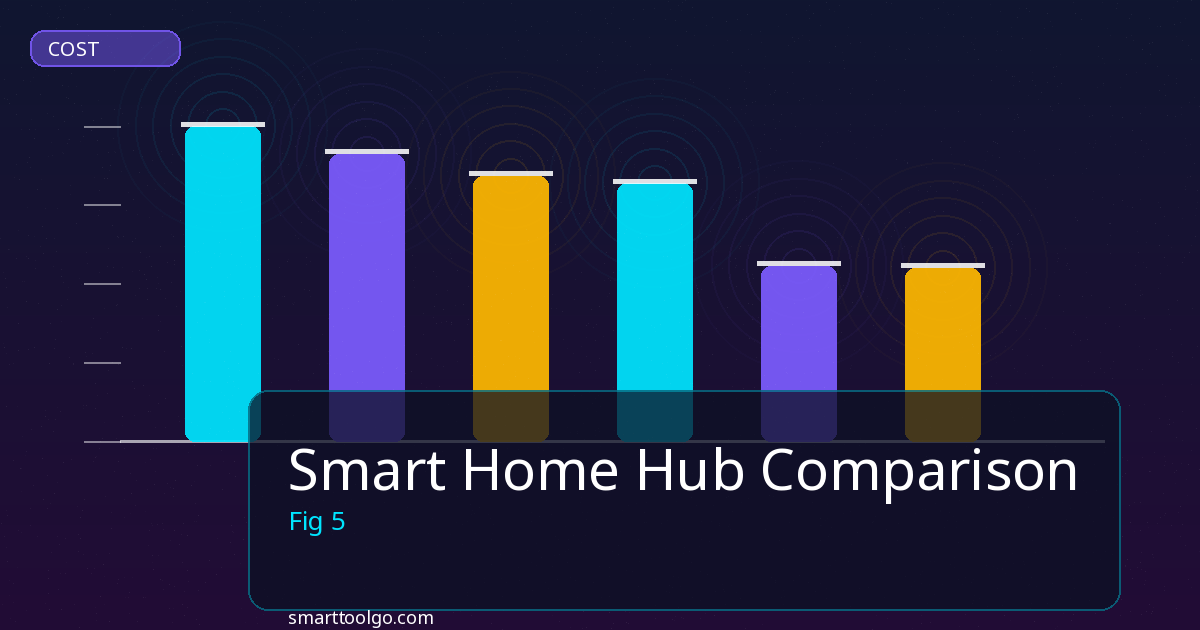
Before choosing, you need to look past the marketing. Here is how the four leading ecosystems actually stack up on the dimensions that determine day-to-day happiness: device compatibility, local versus cloud processing, voice assistant quality, and cost of entry.
| Platform / Tool | Key Features | Pricing |
|---|---|---|
| Apple HomeKit (Home app + HomePod/AirPlay) | End-to-end encryption, Thread support, local-first processing, tight iOS/MacOS integration, strong privacy | Free with Apple account; HomePod mini from $99 |
| Google Home (Google Nest Hub + Home app) | Best-in-class conversational voice assistant, Matter ready, works with Chromecast, adaptive routines | Free app; Nest Hub from $99.99 |
| Amazon Alexa (Echo devices) | Largest device ecosystem (~140,000+ skills), Zigbee built into Echo 4th gen, strong routine editor, shopping integration | Free app; Echo Dot from $49.99 |
| Matter (protocol standard, not a hub) | Vendor-neutral local control via Thread/Wi-Fi, per-device certification, runs on most hubs via bridge | No hub cost; devices carry a 1.3 certification fee |
The pricing column tells the real story. HomeKit and Google can run free on your phone alone, but Amazon's Zigbee radio is the reason a single Echo Dot often replaces a $30 USB dongle. Matter, meanwhile, is not a product you buy — it is a compatibility layer, which makes it the cheapest option of all if you already own a hub. Use this table as a first filter, then read the deep dives below.
Apple HomeKit: The Privacy-First Choice for iOS Households
HomeKit's killer feature has always been that most of its automation runs locally instead of shuttling your data through a cloud. When you turn on a HomeKit-scene light, the request is handled by your HomePod or Apple TV as a local Home Hub, and in most cases nothing touches Apple's servers. Testing in 2026 and 2026 consistently shows HomeKit response times under 200 milliseconds for local automations, which is noticeably snappier than cloud-dependent rivals. The trade-off is a smaller catalog: you will not find quite as many cheap no-name accessories with "Works with Apple Home" on the box, and pairing a HomeKit device requires the manufacturer's app plus a code scan. For a household where everyone already uses iPhones, though, the security and consistency usually win, and HomeKit Secure Video gives you encrypted camera streams with no per-camera subscription fee beyond your iCloud plan.
Google Home: The Assistant That Understands You
Google's edge is conversational understanding. If you say "turn off the living room lights but leave the lamp on," Google gets it; older voice assistants parse that as gibberish. The Google Home app also does the best job of onboarding new third-party devices, and its nested-device structure (Room > Zone > Home) mirrors real layouts better than competing apps. The weakness is the same one Apple has in reverse: Google leans on cloud processing for many routines, so when your internet drops, certain automations pause. For renters and apartment dwellers who move their kit every year, Google Home plus a Nest Hub is a cost-effective and flexible start, and it pairs cleanly with Matter-certified gear. If you have not yet thought through which categories of gadget deserve your money first, our ranked list of top smart home devices is a useful place to begin.
Amazon Alexa: The Biggest Ecosystem, Warts and All
Alexa is the safest bet for wide compatibility. Amazon's Zigbee radio inside the Echo 4th Gen and newer Echo Hub means you can buy many motion sensors, plugs, and locks with no separate bridge, and the Alexa Skills store gives you access to more voice commands than any rival. It is also the most aggressive about shopping and skills, which some users find intrusive. Privacy-minded owners should know Alexa uploads voice recordings to Amazon's cloud by default; you can set hourly auto-deletion in settings if you want. If you just want maximum choice at minimum cost and are comfortable with Amazon's data handling, Alexa remains the volume leader for a reason. Just budget for the fact that heavy automation builders tend to bump up against the free-tier routine limits faster here than on the other platforms.
Matter and Thread: The Protocol Layer Changing the Game
Matter, launched in 2022 and now at revision 1.3, is the closest the industry has come to a common language. A Matter-certified light made for HomeKit will also work with Google Home and Alexa, as long as your hub is Matter-capable — and in 2026 nearly all current hubs are. Thread is the mesh networking protocol Matter often runs over, which keeps commands local and fast. The practical effect: you are no longer chained to one vendor forever. Our recommendation is to treat Matter compatibility as a hard requirement for any expensive device you buy, because it is your insurance against the next ecosystem switch. For a closer look at the assistant-focused gadgets that fill out a modern setup, read our review of smart home assistant devices.
Budget Math: What the Hubs Actually Cost You Over Time
Here is where most buyers overspend. A $99 hub feels cheap until you add three $25 plugs, a $40 camera, and two $30 sensors — which is how a "starter" kit quietly becomes $400.. The cheapest credible route in 2026 is an Amazon Echo Dot ($49.99) used purely as a Zigbee hub, paired with Matter-only bulbs and plugs. If you are already deep in Apple's ecosystem, a HomePod mini at $99 unlocks Thread and local automations that cost zero per month. Whatever you choose, skip the HDMI dongles and "smart speaker plus hub" bundles that add radios you do not need. If a tight budget is your primary constraint, our budget smart home starter guide lays out a full sub-$500 build, and the piece on our sister site covers the workstation angle.
Decision Tree: Which Hub Should You Actually Buy?
- Everyone in the house uses iPhones, and privacy is a priority → Apple HomeKit + HomePod mini
- You want the easiest voice control and do serious text searches → Google Home + Nest Hub
- You want the widest range of cheap third-party gadgets and Zigbee gear → Amazon Alexa + Echo Dot
- You already own a hub and only want future-proof new devices → Buy Matter-certified gear, skip the new hub
- You are a gadget maximalist who enjoys tinkering → start with our list of smart home gadgets worth your money and reverse-engineer your hub from that
For readers working in Chinese, the same device-selection logic, applied to automation scenes, is covered in our 智能家居自动化场景 article. compare current Echo Dot pricing
For more, check out: .
FAQ
Can I mix HomeKit, Google Home, and Alexa devices in one house?
Yes, but only if every device is Matter-certified or otherwise cross-compatible. Matter devices at revision 1.3 work across Apple, Google, and Alexa hubs simultaneously. Anything older with a proprietary protocol — many cheap Wi-Fi-only plugs and cameras — stays locked to the app it shipped with, so check the box for the Matter and Thread logos before buying.
Do I need a separate hub, or can my phone act as one?
Your phone can control devices, but it cannot reliably run automation while locked or away. For local automations that fire when you are out, you need an always-on hub: a HomePod or Apple TV for HomeKit, a Nest Hub for Google, or any Echo device for Alexa. A smartphone alone will drain battery and pause automations the moment the app is closed.
Why does my Google Home sometimes delay commands during an outage?
Because many Google routines route through the cloud. If you store sensitive automations such as locks and alarms, prefer Matter/Thread devices that negotiate locally with your Google Nest Hub, or use a HomeKit setup where local processing is the default. Cloud-delayed commands typically add 1-3 seconds even in normal use.
Is Alexa's $49.99 Echo Dot really enough to run a hub?
For Zigbee-based lights, plugs, and sensors, yes. The Echo 4th Gen and later include a Zigbee radio, so you skip a separate hub. But Alexa has no built-in Thread radio on the cheapest Dots, so Thread/Matter devices may need a separate border router like the Echo Hub or a newer Echo Plus to participate in the mesh network.
How much does Matter actually cost me?
Nothing directly — Matter is a licensing standard, not a product tier. Certified devices carry a small certification fee that is already built into their retail price, typically $1-3 per device. The real cost is that Matter-only devices sometimes cost slightly more than their proprietary Wi-Fi equivalents, which is a reasonable premium for the portability you get in return.
🎯 Find the Perfect Tool for Your Needs
Compare top-rated tools and read expert reviews on SmartToolGo.
Browse All Reviews →