Why Your Form Tool Is Silently Costing You Leads
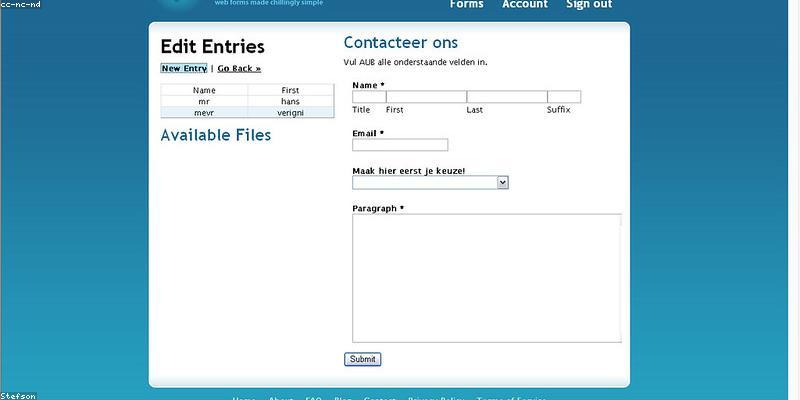
Every extra field you ask for costs you conversions. A 2019 HubSpot analysis across thousands of forms found that each additional form field can cut conversion rates by roughly 10%, and the most egregious offenders—forms asking for employer size, job title, and revenue in a single page—routinely shed 40–60% of would-be leads. Even today, most teams reach for the same three free form tools out of habit, never checking whether those tools actually route data into their CRM, obey their branding, or scale past a few thousand monthly submissions. This guide is about choosing form software by real criteria: where your data lands, what the free tier actually allows, and how much painful migration you can avoid later.
The Four Questions to Ask Before You Pick a Form Builder
Instead of comparing feature grids side by side, work through these four filters in order. They eliminate half the market before you ever open a pricing page.
- Where does the response data live? If the tool cannot push to your CRM or webhook natively, you will spend your life doing CSV exports. Check for Zapier, Make, or native HubSpot/Salesforce integration before anything else.
- Can you hide the brand and use your own domain? White-labeling on the free tier is rare. If clients will see the form, a third-party subdomain can look unprofessional.
- What is the real submission cap, not the advertised "unlimited"? Many tools cap submissions, storage, or file uploads at thresholds that break production forms.
- Does it support conditional logic? Showing field B only when someone picks option A is the single biggest factor in keeping forms short and conversion-friendly.
Step-by-Step: Picking a Builder for a High-Traffic Landing Page
Walk through a concrete scenario: you need a demo-request form on a page that gets 2,000 visitors a month, and those submissions must land in your CRM automatically.
- Count the fields you actually need. Name, work email, company, and one product-interest dropdown. That is four fields. Any tool can handle that—the differences show up elsewhere.
- Test the free tier's submission volume. If your page converts at 3%, you need roughly 60 submissions a month. Most free tiers cover this; the problem is uploads and integrations, not volume.
- Check the webhook or native CRM push. On the free plan of many builders, webhooks and native integrations are locked behind paid tiers. That subscription cost is now part of your real price.
- Verify spam protection bears the load. Google reCAPTCHA or a honeypot is table stakes. You do not want a form that stops accepting mail because it hit a spam threshold.
Form Builders Compared by Real Free Tiers and Limits
| Platform / Tool | Key Features | Pricing |
|---|---|---|
| Typeform | One question at a time, conditional logic, native Slack/Zapier+CRM connect | Free: 10 responses/mo, 1 quiz. Basic: $29/mo for 100 responses/mo. Scaling up: $59/mo for 1k responses |
| Jotform | True no-code form builder, 100+ templates, PDF forms, 30+ payment gateways | Free: 100 submissions & 100MB/mo. Bronze: $34/mo for 1k submissions & 10GB. Silver: $49/mo |
| Google Forms | Unlimited responses, automatic Sheets export, simple logic, zero cost | Free with a Google account; uploading files and some logic features are limited vs. paid rivals |
| Gravity Forms | WordPress plugin, 32 field types, multi-page forms, entry management on your server | One-time license from $59/yr (Basic) to $259/yr (Elite, includes Salesforce/Zapier add-ons) |
| Wufoo | Veteran forms tool, reporting dashboard, approval workflows, 400+ templates | Free: 100 entries/mo, 10 fields per form. Starter: $14/mo for 500 entries; Pro: $29/mo for 2,500 entries |
| Formspree | Developer-focused, receives submissions via form action attribute, spam filtering, webhooks | Free: 50 submissions/mo. Starter: $8/mo for 500; Growth: $18/mo for 5,000 |
Conditional Logic and Multi-Step Flows Are the Real Conversion Levers
A static form forces every visitor down the same path, but visitors arrive at different stages of intent. Conditional logic lets a "What's your company size?" answer branch to a sales-qualified vs. marketing-qualified path. Multi-step forms—like Typeform's one-question-at-a-time interface—can raise completion rates significantly for longer questionnaires because each screen is a single, low-effort decision. The trade-off is that multi-step forms are worse for short lead-capture forms, where the extra click adds friction. Match the pattern to the job: short and punchy for lead gen, longer and stepped for qualification or feedback.
Branding, Custom Domain, and Spam Defense in Practice
Three details decide whether a form feels like part of your product or like a third-party widget. First, custom domain: on Typeform and Jotform you need a paid tier to serve the form from your own subdomain, which matters for trust and email deliverability. Second, branding removal: the "Powered by Typeform" footer disappears only on paid plans on most SaaS builders, whereas Google Forms has no branding removal option at all. Third, spam: native spam filters in Types 1h3 Jotform and Formspree do threshold-based blocking, but if you run heavy general-audience campaigns you should layer a honeypot or CAPTCHA regardless of provider. Test each against a staged campaign before committing to a yearly subscription.
Migration Is Expensive—Choose the Storage Model You'll Fall in Love With
Every form tool stores responses behind an API you cannot easily extract from at scale. If you outgrow a free tier two years in, exporting tens of thousands of entries through the UI is a day of pain, and metadata like file uploads may not export cleanly. Three storage models matter here: (1) database-backed builders like Jotform and Gravity Forms keep responses in their own DB with an export tool; (2) spreadsheet-backed tools like Google Forms write straight to Sheets, which you can replicate freely; (3) developers prefer serverless POST targets like Formspree, where entries are already structured for a webhook. Decide which owner you can live with indefinitely, because switching later means losing conditional logic, notification rules, and internal dashboards, not just the data.
For more, check out: .
Which form builder is actually free for business use, not just personal projects?
Jotform's free plan gives 100 submissions and 100MB of storage monthly, which covers low-volume business forms; Google Forms is free for unlimited submissions but brand-caps and weak conditional logic hurt if you need polish. For a production lead form expecting more than 500 submissions a month, plan on a paid tier (Jotform Bronze at $34/mo or a small Formspree plan) rather than hitting caps mid-campaign.
How do I route form submissions directly into my CRM without manual copying?
Use a native integration if your tool has one—Jotform has direct HubSpot/Salesforce connectors, and Typeform offers native Slack/CRM links on paid plans. Otherwise add a Zapier or Make workflow: trigger on new submission, then map fields into your CRM's create-contact action. Developers can skip middleware with Formspree's webhooks and POST the payload straight to your API.
Why does my form's conversion drop when I add a field, and how do I stop it?
Added fields raise perceived effort and can prompt abandonment, especially when the last question feels personal (revenue, phone number). Cut fields to the minimum needed to qualify a lead, mark everything else as conditional so it only appears when relevant, and consider moving sensitive questions to a second, optional step. Test removing one field and watch the completion rate move within a few hundred sessions.
Are WP plugin builders like Gravity Forms a better deal than SaaS per-submission pricing?
Only if you already run WordPress and can manage the plugin. Gravity Forms is a one-time license ($59–$259/yr) with no response caps and data on your own server, which beats per-submission SaaS for high volume. The catch: you own updates, security patches, and hosting load, and the licensing model means add-ons for Salesforce and Zapier only come on the pricier tiers. Compare your monthly submission volume against the SaaS per-response cost before switching.
If form tooling is one part of a larger productivity stack, see how these builders fit alongside the best productivity tools for 2026 and the AI tools worth adding to your workflow. For handling the constant flow of responses and documents, a dedicated can keep follow-ups consistent, while the broader free productivity tools roundup covers adjacent utilities. And if you are assembling an AI-assisted toolkit, the AI Tool推荐 guide helps you choose automation that pairs with your form data. For the resume side of conversion—building PDFs from submissions—don't miss AI resume builder tools.