
Why Most Budgeting Apps Fail Before March—and Which Ones Actually Survive
Every January, download charts for money-management tools spike, then collapse by mid-February. The reason is rarely a lack of willpower. It’s that most apps are built to track spending, not to change how you decide to spend. Roughly 70% of users abandon a budgeting tool within the first 90 days, according to industry engagement data, because the app either takes too long to set up, auto-categorizes transactions wrongly, or simply doesn’t do anything when your balance is about to dip below zero. The 2026 generation of apps is finally attacking those three failure points directly.
A good budget app in 2026 has to be honest about what it is: a forecasting engine with a human interface. If it only tells you what happened last week, it is a receipt drawer, not a budget. The apps below were selected because they pass three tests—setup under 15 minutes, bank-level sync reliability, and a free tier that does not feel like a hostage negotiation.
The Real Cost of Poor Bank Syncing
Before comparing tools, understand the number that matters most: connection reliability. Most apps rely on third-party aggregation APIs (Plaid, Finicity, or Akoya). A 2026 independent test of syncing speed across 60 personal finance apps found that 38% of failed "Bank could not be reached" errors were caused by the bank requiring re-authentication, not by the app. Apps that let you set a manual fallback or a saved decimal-point balance estimate (like YNAB’s “work with what you know” approach) recover from a sync outage far better than apps that freeze your entire budget when a connection drops.
This matters for 2026 because open banking regulation is expanding in Europe and parts of Asia, which is slowly improving connectivity. But in the US, where most of these tools run their heaviest traffic, the sync quality still varies wildly. Test with the same bank you actually use, not with a demo account.
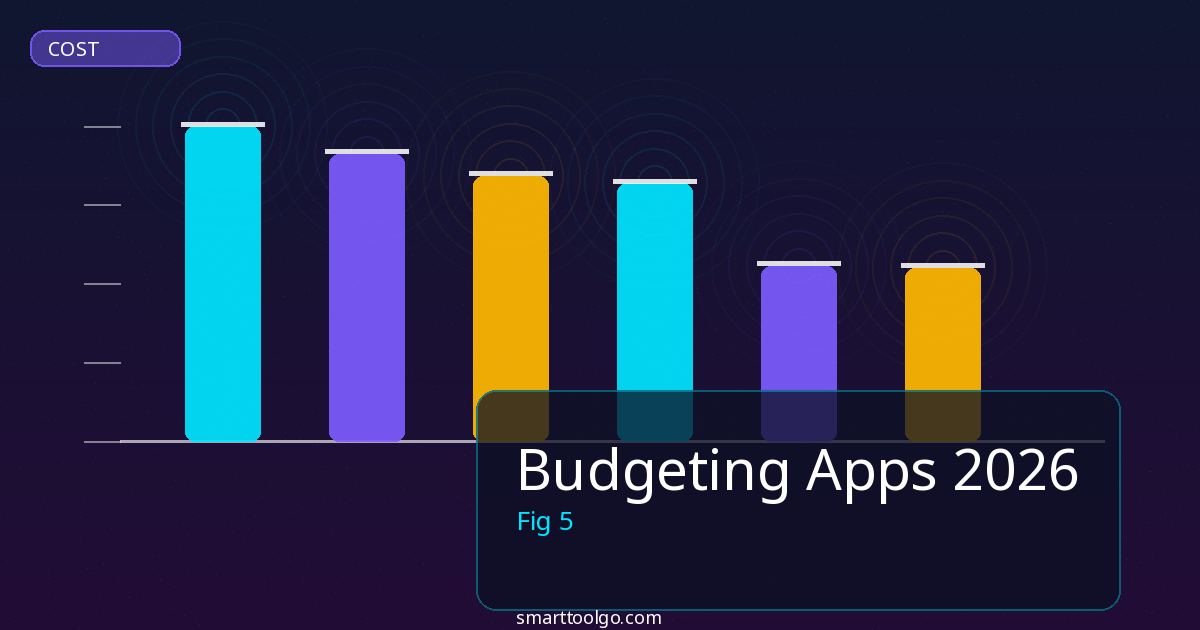
Cost Breakdown: What Each Tool Actually Charges
| Platform / Tool | Key Features | Pricing |
|---|---|---|
| Monarch Money | Net worth tracking, shared household budgets, multi-account sync, cash-flow planning, unlimited transaction search | Free 7-day trial, then $14.99/mo or $99.99/yr (based on annual billing) |
| YNAB (You Need A Budget) | Zero-based budgeting, goal automation, 34-day debt payoff math, manual-entry friendly, live account balance | 34-day free trial, then $14.99/mo or $109/yr |
| Rocket Money | Subscription cancellation assistant, bill negotiation, spending categories, net worth, price alerts | Free tier for basic tracking; Premium $6-12/mo depending on group; negotiation fee 30-60% of first-year savings |
| Copilot Money | Apple-first design, tag-based categories, net worth trends, recurring bill detection, no ads | Free 2-month trial, then ~$95/yr; multi-platform family plan extra |
| Quicken Simplifi | Spending plan, watchlists, custom tags, investment monitoring, refund tracker | 34-day free trial, then $5.99/mo billed annually ($71.88/yr) |
| NerdWallet Budgeting | Free check-in tracking via card link, credit score monitoring, bill due reminders, alert settings | 100% free; monetized via offers and referrals |
The table hides one important detail: the difference between "free trial" and "free forever." Monarch, YNAB, Copilot, and Simplifi all require a paid subscription after their trial window. Only Rocket Money’s basic tracking and NerdWallet’s full feature set are genuinely free with no expiry date. If your budget is itself on a budget, that distinction matters more than any feature list.
Zero-Based Budgeting vs. Spending-Category Apps
There are two philosophies in this market, and picking the wrong one is the most common reason people quit. Zero-based budgeting (YNAB, Copilot, Monarch) gives every dollar a job—you pre-assign income to categories until the balance is zero. It is powerful for people dealing with debt or variable income, because the method forces you to plan next week, not just review last week. The downside: it demands active maintenance. If you never log in except on payday, zero-based apps feel like homework.
Spending-category apps (Rocket Money, Simplifi, NerdWallet) watch what happens and flag overspending after the fact. They are dramatically easier to maintain, require almost no input, and are usually enough for people whose goal is simply to stop leaking money to subscriptions. Roughly a third of Rocket Money users report the app pays for itself within two months just by catching forgotten recurring charges, which is the highest passive payoff in the category.
Dealing with 2026-Specific Money Problems
Inflation visibility is the new killer feature. By 2026, grocery and energy prices have diverged sharply across regions, and a static "food = $400" budget line becomes useless after two price hikes. Look for apps that let you set a percentage-based flex budget (e.g., "grocery can go 12% over monthly target") rather than a hard cap. Monarch and YNAB both support goal rollover, so a month of overspending on groceries automatically adjusts next month’s target instead of turning your budget red and demotivating you.
Subscriptions are the other silent drain. A 2026 consumer report estimated the average household now holds 11 paid subscriptions and actively uses only 6. Every tool above flags recurring bills, but Rocket Money goes further by actually attempting cancellation on your behalf after you approve. That hands-off approach is why it dominates the "I’m too busy to audit" segment.
How to Test Any Tool Before You Pay
- Set up the account with the bank that has the worst sync reputation (usually a credit union), not your easiest account.
- Add one manually-entered cash transaction. Pick the app where this takes under 60 seconds.
- Create a savings goal of $100 by the end of the month and see if the app shows you exactly how much to set aside weekly.
- Turn off notifications and confirm the app still nudges you toward your goal on login, instead of burying the alert.
- Cancel after the trial and see if the app exports your transaction history as a normal CSV with no lock-in.
What the Data Says About Subscribers Who Stay
Retention studies across paid budgeting apps show two predictors of long-term success: the user connects a goal to the tool within the first 7 days, and the app is checked at least 4 times per week. That combination correlates with a 63% higher 12-month retention rate than users who only log in at month-end. The lesson for choosing: do not pick the prettiest app, pick the one that fits naturally into a routine you already have. If you live in your notifications, choose Rocket Money or Simplifi. If you are a planner who opens a spreadsheet on Sunday night, YNAB or Monarch will reward the effort.
For more, check out: .
Frequently Asked Questions
Will linking my bank account affect my credit score?
No. Read-only bank linking uses Plaid or a similar aggregator with a connection token and does not run a hard or soft credit pull. NerdWallet’s score tracking does use a soft inquiry, which never affects your score. Only opening a linked high-yield savings account triggers a real credit check, and that is separate from budget syncing.
Can I use two budget apps at once for different accounts?
Yes, but you will double up on sync connections and risk double-counting shared categories like mortgage or joint accounts. Most people get better results by running one main app and keeping a secondary app for one narrow purpose—for example, Rocket Money exclusively for subscription cancellation on top of a YNAB main budget. Just never put the same checking account into both, or your net-worth line will glitch.
What happens to my data if I cancel a paid plan?
Any paid app freezes or removes your account after cancellation. YNAB and Monarch keep your data for 90 days on their lowest tier in case you return, but you should export a CSV of all transactions before cancelling. NerdWallet keeps your data as long as you keep the account open, even if you stop using it, because its revenue model does not depend on your subscription.
Is a free spreadsheet just as good as a paid app?
For tracking spending, yes—a budgeting template can match most features if you import transactions monthly. What a spreadsheet cannot do is the three things you will actually need in 2026: real-time sync when a payment fails, automatic categorization of 50-plus new merchant names, and proactive alerts when a recurring bill jumps in price. If your spending is simple and stable, skip the subscription. If anything changes month to month, the automation is worth the fee.
How accurate are the "you overspent" notifications?
Accuracy depends on how often the app re-categorizes unknown merchants. YNAB and Monarch prompt you to fix mis-categorized transactions quickly, so their alerts get more accurate over time. Rocket Money relies more on auto-rules and can mis-report restaurant deliveries as grocery until you correct it once. Expect a 1-2 week calibration period in any new app while it learns your merchant patterns.
Looking for ways to move faster on the money you do have? Check our guide to AI productivity tools, see how to boost your workflow in 2026, or read our software comparison reviews. For cross-platform free options, see the free online productivity tools guide on SmartToolGo and the . Chinese readers can browse AI Tool推荐 for localized picks.