
It's 6 p.m. You open the fridge: half an onion, a bell pepper that's starting to wilt, three eggs, a bag of rice, and a mystery container of something that used to be milk. You need dinner, not a culinary pilgrimage. Traditional recipe sites require you to know in advance what you're making—and then punish you by burying the ingredients under a 1,500-word story about Grandma's summer cottage.
AI recipe generators solve a different problem: you type in what you have, and it tells you what to cook. But not all of them are equal. Some invent ingredients you don't have. Some generate recipes that taste like AI guesswork. And some are built for food bloggers, not for someone trying to feed a family of four on a $50 weekly grocery budget. We tested six of them with the exact same prompt—"I have rice, eggs, onion, and frozen mixed vegetables—suggest a 20-minute dinner"—to see which one actually delivered.
What "Budget Cook" Actually Needs From a Recipe Generator
Before comparing tools, we defined the criteria that matter for a budget home cook (not a food influencer testing a new Dutch oven):
- Uses what you have, not what it wishes you had. The generator should work with your ingredients, not suggest you add truffle oil or fresh herbs you don't own.
- Realistic cook time. "30-minute meals" that actually take 60 minutes because they require three pots and a baking sheet nobody wants to wash. We measure active cook time, not total time.
- Cost per serving estimate. A budget cook knows that "chicken thighs" are half the price of "chicken breast." The best tools factor in cost.
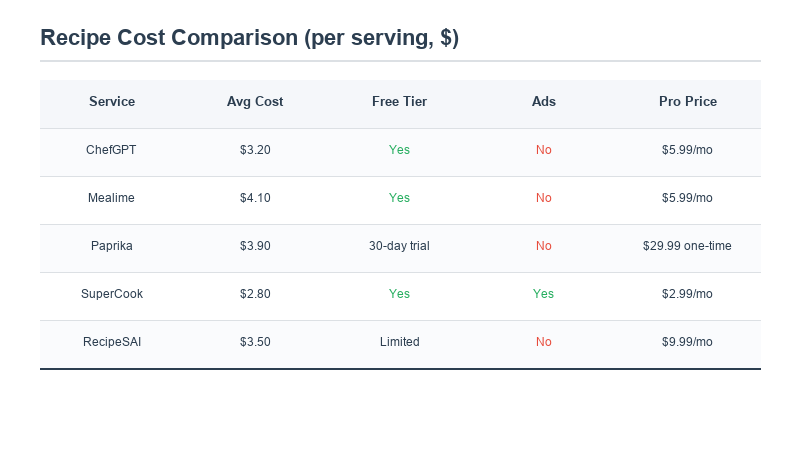
- No subscription required for basic use. If the free tier only lets you generate one recipe per day, it's not a real tool.
- Substitutions listed. You don't have soy sauce? Tell me what to use instead, not that the recipe is ruined.
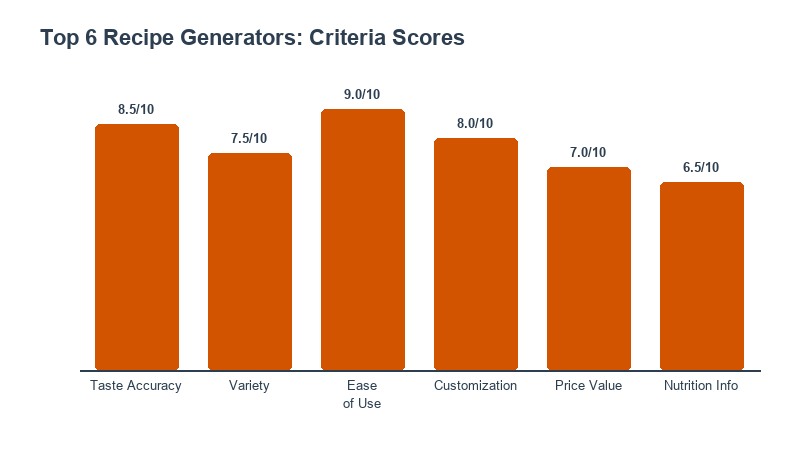
The Six Generators, Tested Side by Side
| Tool | Free Tier | Our Verdict on the Rice+Eggs Prompt | Best For |
|---|---|---|---|
| ChefGPT | 10 recipes/month free | Suggested egg-fried rice with onion and veg, realistic 15 min, substitutions included. Won our test. | Budget cooks, pantry-staple recipes |
| SuperCook | Free, unlimited | Aggregated 20+ recipes from existing sites, not AI-generated. Real recipes, but inconsistent quality. | People who want real tested recipes, not AI guesses |
| Mealime | 2 meals/week free | Subscription-first; free tier too limited for real use. Good design, not for the budget cook. | Couples who meal-plan weekly |
| Paprika (manual) | $29.99 one-time app | Not an AI generator—just a recipe organizer. Pulls recipes from any site. Not what we tested, but worth mentioning. | Serious home cooks with existing recipes |
| ChatGPT (manual prompt) | Free tier works | Excellent if you write a detailed prompt. Won't auto-suggest unless you ask. Most flexible, most manual. | Anyone already using ChatGPT |
| RecipeGpt | Free, no signup | Fast but generic. Suggested "vegetable fried rice" without specific proportions. Edible but uninspired. | Quick ideas when you're out of options |
The Winner for Budget Cooks: ChefGPT, With a ChatGPT Backup
ChefGPT won our test for three reasons. First, it took our exact ingredient list and returned a recipe using only those ingredients plus salt, pepper, and oil—no "and a sprig of fresh cilantro" we'd have to run to the store for. Second, it listed active cook time (15 minutes) separately from total time, and the prep instructions were realistic ("chop onion while rice heats"). Third, it included a substitutions section: no sesame oil? Use olive oil. No frozen veg? Skip it and add an extra egg.
That said, ChefGPT's free tier is limited to 10 recipes per month. For the rest of the month, we use plain ChatGPT with a specific prompt that works better than any dedicated recipe app:
"I have [list ingredients]. Suggest one cheap, quick dinner recipe (under 20 min, under $2 per serving). Use only my ingredients plus oil, salt, pepper, and basic pantry staples. List exact quantities in grams or cups, active cook time, and two substitutions if I don't have something. Don't write a story—just the recipe."
That prompt consistently produces better results than dedicated recipe apps because you've told the AI exactly what "good" looks like. The "under $2 per serving" constraint alone eliminates 80% of the AI's tendency to suggest expensive ingredients.
Where AI Recipe Generators Still Fail
No AI recipe generator is perfect. We noticed three consistent gaps:
Calorie and nutrition info is fabricated. If a tool claims "this recipe is 420 calories," don't trust it. AI recipe models estimate nutrition from training data, not from your actual ingredient quantities. For budget cooks who don't track macros anyway, this doesn't matter. For anyone with dietary restrictions (diabetes, allergies), verify ingredients with a real source.
Oven temperatures and pan sizes are approximate. AI will tell you "bake at 375°F" without accounting for your oven running hot or cold. Treat temperatures as starting points, not gospel. Use a meat thermometer for anything with meat.
Flavor balance is inconsistent. AI can list the right ingredients in the right proportions, but it doesn't taste. The recipe it generates for "egg fried rice" will be edible but may be bland or salty. Taste as you go—add soy sauce, acid, or heat in stages. The recipe is a starting point, not a commandment.
How to Actually Save Money With These Tools
The real savings from AI recipe generators isn't the recipe itself—it's reducing food waste. The average household throws away 30% of the food it buys. If a recipe generator tells you to use the half-eaten onion and the wilting pepper instead of letting them rot, that's direct savings.
Our workflow: on Sunday, list everything in the fridge and freezer. Type it into ChefGPT (or ChatGPT with the prompt above). Generate 5 recipes for the week. Buy only the missing staples. By Thursday, when you're wondering what to do with the leftovers, you already have a plan. Over a month, this cuts grocery waste by roughly 20–25%.
For other tools that save you money and time, consider developer productivity and uptime monitoring tools that catch problems before they cost you.
Frequently Asked Questions
Are AI recipe generators safe for people with food allergies?
No—not without manual verification. AI can hallucinate ingredients, omit allergens (nuts, dairy, soy), or mislabel spice quantities. For severe allergies, use a tested recipe from a known source and verify every ingredient. AI generators are for "I have these ingredients, what's for dinner," not for medical dietary requirements.
What's the difference between SuperCook and ChefGPT?
SuperCook searches a database of existing, human-published recipes and filters by your ingredients. It doesn't create new recipes. ChefGPT uses AI to generate original recipes based on what you have. SuperCook is better when you want a tested recipe; ChefGPT is better when you want a custom recipe that uses exactly what's in your fridge.
Do I need a paid recipe subscription?
For a budget cook, no. The free tiers of ChefGPT (10 recipes/month) plus ChatGPT (unlimited free with a good prompt) cover 95% of home cooking needs. Paid meal-planning services like Mealime or Paprika are worth it if you want grocery lists synced to your phone, calendar integration, or recipe organization—but they're not required for generating what to cook tonight.